Scratched Hardwood Floor Repair in Ottawa: Do You Need to Refinish the Whole Floor?
A scratched hardwood floor does not necessarily need to be sanded and refinished from wall to wall.
In many cases, the damage is limited to one or two boards or to the finish itself. That can make a localized repair a better choice than refinishing an entire room.
The important part is figuring out what has actually been damaged.
A light scuff is treated differently from a scratch that has gone through the finish and into the wood. A deep gouge may need filling and colour matching, while a badly damaged board may be better replaced. And if scratches are spread throughout a room, repairing them one at a time may no longer make sense.
This is especially common around Ottawa entryways, where winter grit, salt and regular foot traffic can wear down a floor much faster than quieter areas of the house.
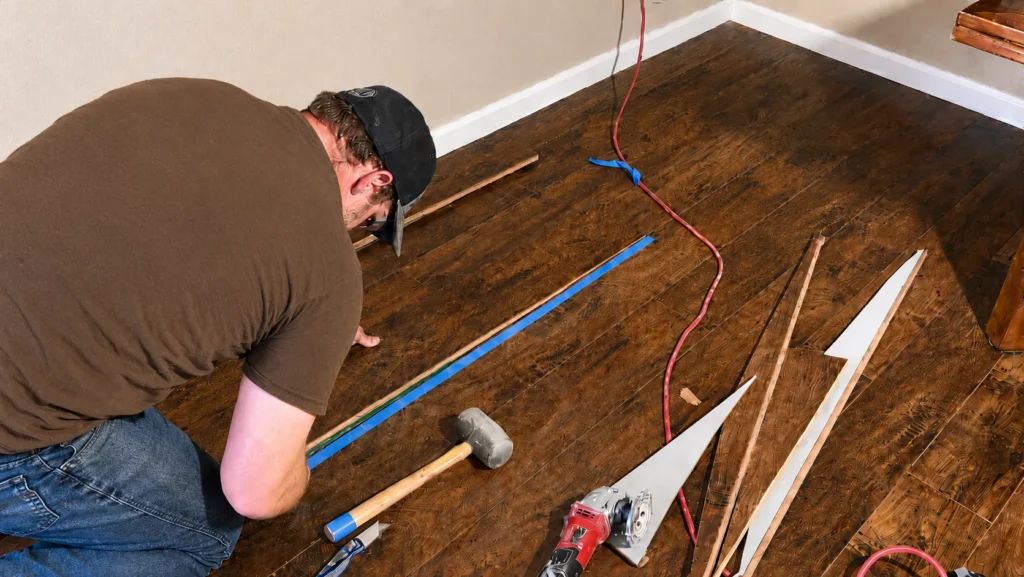
Can a hardwood scratch be repaired without refinishing the whole floor?
Often, yes.
If the damage is isolated and the rest of the floor is in good condition, there may be no reason to refinish the entire floor.
The repair depends mainly on three things:
- how deep the scratch is
- how much of the floor is affected
- the condition and type of the existing finish
A scratch that only marks the finish may need little more than a localized repair. If the wood itself has been cut or gouged, the repair becomes more involved.
The mistake to avoid is assuming that every visible scratch should be sanded.
Aggressively sanding one small mark can remove perfectly good finish around it and turn a small defect into a much larger repair.
First, determine what kind of damage you’re looking at
Hardwood floors collect plenty of marks that look like scratches but aren’t necessarily scratches in the wood.
A dark line across the floor could be:
- dirt or salt residue
- a rubber or plastic scuff
- a surface scratch in the finish
- a deeper scratch through the finish
- a dent or gouge
- discoloration from moisture or sunlight
- general wear across an area of the floor
That distinction matters.
For example, a scuff transferred from furniture may disappear with the appropriate cleaning method. Sanding it would be unnecessary.
On the other hand, if the finish has been cut through and the wood underneath is exposed, cleaning will not solve the problem.
A fingernail test can sometimes tell you that a mark has some depth, but it doesn’t tell you exactly how deep it is or what finish is on the floor. That’s where an assessment becomes useful.
Light scratches and finish-only damage
If a scratch has not gone into the wood, a localized repair may be possible.
The exact method depends on the existing finish. The new material has to be compatible with what’s already on the floor, and the repaired area needs to blend with the surrounding sheen.
This is where seemingly simple repairs can become tricky.
A floor finished in satin, for example, can make a repair stand out if the new area dries with a noticeably different sheen. The same problem can occur with colour.
An older hardwood floor has also changed since it was installed. Sunlight, cleaning, wear and previous refinishing can all affect its appearance. Matching the colour from a sample or stain chart does not necessarily mean matching the colour of the floor in your home.
For a small mark in an inconspicuous area, a touch-up may be perfectly reasonable. In a prominent area, especially where light hits the floor directly, the repair needs more care.
What about scratch-repair kits and wax sticks?
There is a place for DIY touch-up products.
A wax fill stick or similar product can disguise a small cosmetic defect. If you’re dealing with a minor mark and perfection isn’t the goal, that may be enough.
The limitation is that you’re mostly disguising the damage. You’re not necessarily restoring the protective finish around it.
That’s why a repair made with a touch-up product can become visible again as the floor continues to wear.
I’d be more cautious about DIY products on a floor that has an unusual colour, an older finish, or a prominent scratch in the middle of a room. Applying stain or finish without knowing what is already on the floor can make the eventual professional repair more difficult.
Deeper scratches and gouges
Once a scratch reaches the wood, there is more to deal with than the appearance of the mark.
A localized repair may involve:
- Cleaning and preparing the damaged area
- Removing loose or damaged material
- Sanding the affected section
- Filling the defect where necessary
- Matching the colour
- Applying a compatible finish
- Blending the repair into the surrounding floor
The sanding isn’t usually the hardest part.
Getting the repair to look like it belongs there can be.
Wood species, stain, age and exposure to sunlight all affect colour. The existing finish affects sheen. Even two boards from the same floor can look slightly different after years of use.
This is why a repair can look good under a work light but look obvious in daylight beside a window.
When is replacing the board a better option?
There are situations where trying to repair a damaged board isn’t worth it.
Replacement may make more sense when a board has a large gouge, significant splitting, severe damage or a defect that would require too much material to be removed.
The availability of a matching board is part of the equation.
With older floors, the original product may no longer be manufactured. Even when the same species is available, a new board can look different from the surrounding floor because the existing wood has aged and changed colour.
Engineered hardwood adds another consideration.
Some engineered floors can be sanded and refinished. Others have a relatively thin wear layer and should not be treated like solid hardwood. The amount of material remaining above the tongue and groove also matters on floors that have already been sanded.
There isn’t a reliable rule such as “engineered floors can be refinished twice” or “solid floors can always be refinished five times.” The construction and condition of the particular floor matter more than a generic number.
What if the whole room is scratched?
This is where the decision changes.
One damaged board is a repair problem.
A hallway where almost every board has scratches, dullness and worn finish is a floor-condition problem.
Trying to repair dozens of individual marks can leave you with a collection of slightly different repairs. At some point, treating the floor as a whole produces a better result.
Depending on the condition of the existing finish, the options can include a screen-and-recoat, partial refinishing or full sanding and refinishing.
Screen-and-recoat
A screen-and-recoat involves lightly abrading the existing finish and applying a new coat of compatible finish.
It does not mean sanding the floor down to bare wood.
This can be useful when the wood itself is in good shape but the finish has become scratched or worn. It is not suitable for every floor, however. The existing finish needs to be compatible with the new coating and in a condition that allows it to be recoated successfully.
Partial refinishing
If the problem is limited to one room or a defined section, it may be possible to refinish that area rather than the entire floor.
Doorways and existing transitions can sometimes provide natural stopping points.
The challenge is making the new work blend with the older flooring beside it. A technically good refinish can still look wrong if there is an obvious colour or sheen change at the boundary.
Full refinishing
When scratches and wear are widespread, full refinishing may be the better option.
The existing finish is removed and the wood surface is prepared for a new finish. This gives you a more consistent result than trying to chase individual scratches across an entire floor.
It is also a much larger job, so it shouldn’t be the automatic answer to a single damaged area.
A simple way to think about repair versus refinishing
A useful rule of thumb is:
One or two isolated scratches:
Start with a localized repair.
A deep gouge on one or two boards:
Consider a localized wood repair or board replacement.
Many scratches in one room:
Look at whether recoating or refinishing the room would produce a better result.
Scratches and worn finish throughout the house:
A broader refinishing assessment is probably warranted.
Cupping, buckling, swelling or water staining:
Stop treating it as a scratch. The moisture problem needs to be investigated first.
These aren’t hard rules. A floor that has already been refinished several times may need a different approach from a relatively new floor with one damaged board.
Ottawa winter can be tough on hardwood floors
Ottawa floors deal with a lot of abrasive material during the winter.
Salt, sand and grit come in on boots and get ground into the floor under foot traffic. Entryways and the paths leading away from them can therefore show wear much sooner than areas that receive less traffic.
You don’t need to keep your house in a museum to protect the floor.
A few habits make a noticeable difference:
- Put mats inside exterior doors.
- Remove outdoor footwear at the entrance.
- Sweep or vacuum grit regularly.
- Use suitable felt pads under furniture.
- Lift furniture instead of dragging it.
- Keep pet nails properly maintained.
- Follow the cleaning recommendations for your particular flooring and finish.
The objective isn’t to make hardwood scratch-proof. It isn’t.
The objective is to reduce the amount of grit and friction the finish has to deal with every day.
Don’t aggressively sand a single scratch
This is probably the most common DIY mistake to avoid.
If you have a small scratch, it can be tempting to grab sandpaper and work directly on the mark until it disappears.
The problem is that the scratch isn’t the only thing you’re sanding.
You are also removing finish from the area around it. Once you’ve created a larger bare or dull patch, you’ll need to make that new area blend with the surrounding floor.
The same applies to stain.
A stain that looks right on a sample board can look completely different on an older floor. Applying it directly to the finished floor without testing it can make a small scratch considerably more noticeable.
If you don’t know what finish is on the floor, it’s also worth being careful about applying a new coating over it.
Sunlight can make colour matching harder
Hardwood doesn’t necessarily stay the same colour throughout its life.
Areas exposed to strong sunlight can age differently from areas underneath furniture or rugs. Move a piece of furniture after several years and you may see a noticeable difference in colour.
That creates an additional problem when repairing scratches.
The goal isn’t simply to match the original stain. The goal is to make the repair work with the floor as it looks today.
A professional may need to assess the surrounding boards and test colour and finish before completing the repair.
How much does hardwood scratch repair cost in Ottawa?
There isn’t a meaningful price-per-scratch.
A small finish repair on one board and repairing ten damaged boards are completely different jobs.
The cost can be affected by:
- the size of the damaged area
- the depth of the damage
- the number of boards involved
- whether the floor is solid or engineered
- the wood species
- the existing finish
- previous sanding or refinishing
- how difficult the area is to access
- whether colour matching is required
- whether a board needs to be replaced
For a small repair, an on-site assessment can be more useful than a generic square-foot price.
For larger refinishing projects, the floor’s total area becomes a much bigger part of the cost.
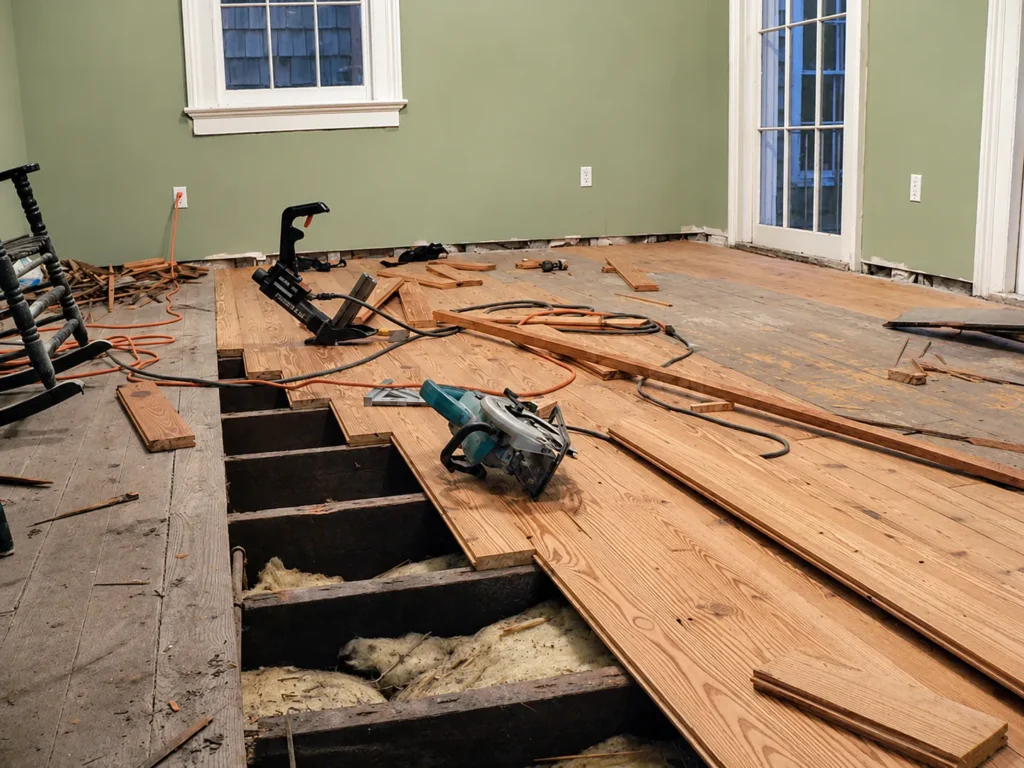
What we look at before recommending a repair
Before deciding what to do with a damaged hardwood floor, we’d want to know more than just how long the scratch is.
The useful questions include:
- Is the floor solid or engineered?
- How deep is the damage?
- Is the wood damaged or just the finish?
- What finish is currently on the floor?
- How old is the floor?
- Has it been refinished before?
- Is the damage isolated?
- Is the surrounding finish already worn?
- Are there signs of moisture or movement?
- Can the damaged board be repaired?
- Would replacing the board produce a better result?
- If the area is refinished, where can the work naturally stop?
Those answers usually narrow the options considerably.
Sometimes the answer is a small repair. Sometimes replacing a board is the sensible choice. And sometimes the scratch is simply the most visible sign that the finish across the room has reached the end of its useful life.
Repair, refinish or replace?
The best approach is usually the least invasive repair that gives you a result you’re happy with.
That doesn’t always mean choosing the cheapest option.
If one board has a small gouge, sanding an entire room may be unnecessary.
If an entire hallway has worn finish, repairing individual scratches may be a waste of time and money.
And if a board is badly damaged, repeatedly filling and sanding it may make less sense than replacing it.
The condition of the surrounding floor is just as important as the scratch itself.
Frequently Asked Questions
Can every hardwood scratch be repaired without refinishing the whole floor?
No. Many isolated scratches can be repaired locally, but deeper damage, widespread wear or a failing finish may call for a larger project.
Is a finish scratch easier to repair than a gouge?
Generally, yes. A scratch limited to the finish doesn’t require repairing the wood itself. The challenge is often getting the repaired area to match the surrounding colour and sheen.
Can engineered hardwood be sanded?
Some engineered hardwood can be sanded and refinished, but not all of it. The thickness of the wear layer and the construction of the floor need to be considered before sanding.
Should I use a hardwood scratch-repair kit?
For a minor cosmetic mark, a suitable touch-up product may be fine. Be more cautious with sanding, staining or applying finish yourself, particularly if you don’t know what finish is already on the floor.
How do I know if I need a repair or a full refinish?
Look at the condition of the surrounding floor. One or two damaged boards are very different from an entire room covered in scratches and worn finish.
Can water damage be repaired like a scratch?
No. Water can cause swelling, staining, cupping, buckling and other problems that need to be assessed separately. The source of the moisture should be addressed before cosmetic repairs are attempted.
Hardwood Floor Repair in Ottawa
If you’re dealing with a scratched hardwood floor and aren’t sure whether it needs a small repair or a larger refinishing job, an in-person assessment can help determine the appropriate approach.
Solomon Flooring’s hardwood floor repair service in Ottawa handles repairs ranging from localized damage and board replacement to larger flooring projects where refinishing is the better solution.
You can also contact Solomon Flooring with photographs of the damage and whatever information you have about the floor. Photos are useful for an initial look, although they aren’t always enough to determine the repair method.
The goal isn’t to refinish an entire floor simply because one board is scratched.
It’s to figure out what is actually damaged and fix that part properly.