Carpet vs. Hardwood vs. Vinyl Plank: The Best Flooring for Each Room (Ottawa Guide)
| Room | Best default choice | Why it usually works |
|---|---|---|
| Living room | Hardwood | Handles normal dry traffic and can be refinished |
| Dining room | Hardwood or vinyl plank | Both clean easily after meals |
| Bedroom | Carpet | Cuts footfall noise and feels warm |
| Home office | Carpet or hardwood | Choose carpet for sound control and hardwood for chair movement |
| Kitchen | Vinyl plank | Handles routine spills when the product and installation suit wet areas |
| Mudroom | Vinyl plank | Deals with snow, grit, and wet boots |
| Laundry room | Vinyl plank | Gives water-prone rooms a practical surface |
| Basement | Vinyl plank | Works well over a properly prepared, moisture-managed subfloor |
| Bathroom | Vinyl plank | Suits frequent splashes when the product permits bathroom use |
| Stairs | Carpet or hardwood | Carpet softens noise; hardwood needs sound nosings and a clean finish |
Ottawa puts flooring through a full shift. Winter brings dry indoor air, wet boots, salt, and grit. Summer brings humidity. Basements sit on concrete and keep their own weather. A floor can look calm in a sample rack and start filing complaints six months later.
The basic rule stays plain. Use hardwood in dry rooms, carpet where warmth and sound matter, and vinyl plank where water keeps showing up. Product specifications still rule the job. A waterproof plank does not make a leaking basement dry. A fine hardwood board does not ignore indoor humidity. Carpet does not forgive a damp slab.
This guide treats the room as the starting point. It also treats the subfloor as evidence. Before choosing a finish, check moisture, flatness, traffic, cleaning habits, pets, chair wheels, exterior doors, and the amount of noise that travels through the house. The Ottawa flooring installation cost guide explains the price factors. The flooring cost calculator for Ottawa gives a quick planning range. Neither tool can diagnose a basement leak or a rolling subfloor – the floor keeps the final record.
The Room-by-Room Verdict for Ottawa Homes
The table below gives a default answer. It does not issue a commandment. Old Ottawa homes contain plank subfloors, patched additions, narrow stairs, radiators, and rooms that stopped being square sometime during the Diefenbaker years. Newer homes bring open plans, large windows, concrete condo slabs, and builders’ transitions. Each condition changes the installation details.
| Room or zone | First choice | Viable second choice | Main warning |
|---|---|---|---|
| Living room | Hardwood | Vinyl plank | Control grit and humidity |
| Dining room | Hardwood | Vinyl plank | Wipe spills quickly |
| Bedroom | Carpet | Hardwood | Carpet needs regular vacuuming |
| Nursery | Carpet | Vinyl plank with rug | Deal with spills at once |
| Home office | Hardwood | Low-pile carpet | Use a chair mat where needed |
| Kitchen | Vinyl plank | Hardwood with strict spill control | Check product approval for wet areas |
| Mudroom | Vinyl plank | Hardwood with large mats | Salt and grit scratch finishes |
| Laundry | Vinyl plank | Hardwood only with careful risk control | A machine leak can travel under any floor |
| Basement family room | Vinyl plank | Engineered hardwood on a suitable system | Test and manage slab moisture |
| Basement bedroom | Vinyl plank or carpet tile in a verified dry space | Engineered hardwood | Avoid absorbent flooring over damp concrete |
| Bathroom | Vinyl plank | None of these three in every case | Follow the exact product instructions |
| Stairs | Carpet or hardwood | Vinyl with an approved stair system | Loose edges and poor nosings create hazards |
Moisture gets the deciding vote in kitchens, laundry rooms, bathrooms, and basements. The U.S. Environmental Protection Agency advises against carpet near chronic water sources and warns that carpet over concrete can stay damp when water or vapour moves through the slab. CMHC also notes that basement floor coverings may need removal when they become wet or damp. Those facts push the default toward vinyl plank flooring installation in Ottawa and properly planned basement flooring in Ottawa. EPA flooring and moisture guidance and CMHC mould guidance both put moisture control ahead of surface appearance.
Dry rooms allow more freedom. Living rooms often suit hardwood. Bedrooms often suit carpet. Open-plan main floors can use one continuous hardwood or vinyl surface to avoid a row of transition strips. The floor plan makes the call – and the house usually states its case without poetry.
Living Rooms and Dining Rooms: Hardwood Gets the Dry Work
Living rooms and dining rooms usually stay dry. That gives hardwood a fair field. It takes daily foot traffic, supports normal furniture, and allows repair or refinishing after the finish grows tired. Solid hardwood suits many above-grade wood subfloors. Engineered hardwood flooring in Ottawa can suit concrete, condos, and rooms that need a stable layered construction. The exact product and installation method still matter.
Ottawa heating seasons pull moisture from indoor air. Wood reacts. The National Wood Flooring Association states that wood gains moisture in humid conditions and loses moisture in dry conditions. Swelling, cupping, gaps, and splits can follow large environmental changes. The NWFA recommends maintaining indoor conditions near 30 to 50 percent relative humidity and 60 to 80°F. Canadian homeowners can ignore the Fahrenheit scale and keep the humidity number – the boards will understand. Read the NWFA moisture-management guidance before assuming every winter gap signals failed workmanship.
Dining rooms create a different problem. Chairs drag. Food lands. A felt pad under each chair leg prevents a surprising amount of damage. A mat at the exterior door catches salt and grit before it reaches the finish. Spills need a cloth, not a committee. Standing water can enter seams and affect the wood.
Vinyl plank remains a sound second choice for living and dining areas that see pets, heavy traffic, or frequent spills. It gives the room a wood-look surface without asking the material to behave as wood. Carpet can work in a separate living room where sound matters, though dining-room carpet demands regular cleaning after dropped food and chair traffic.
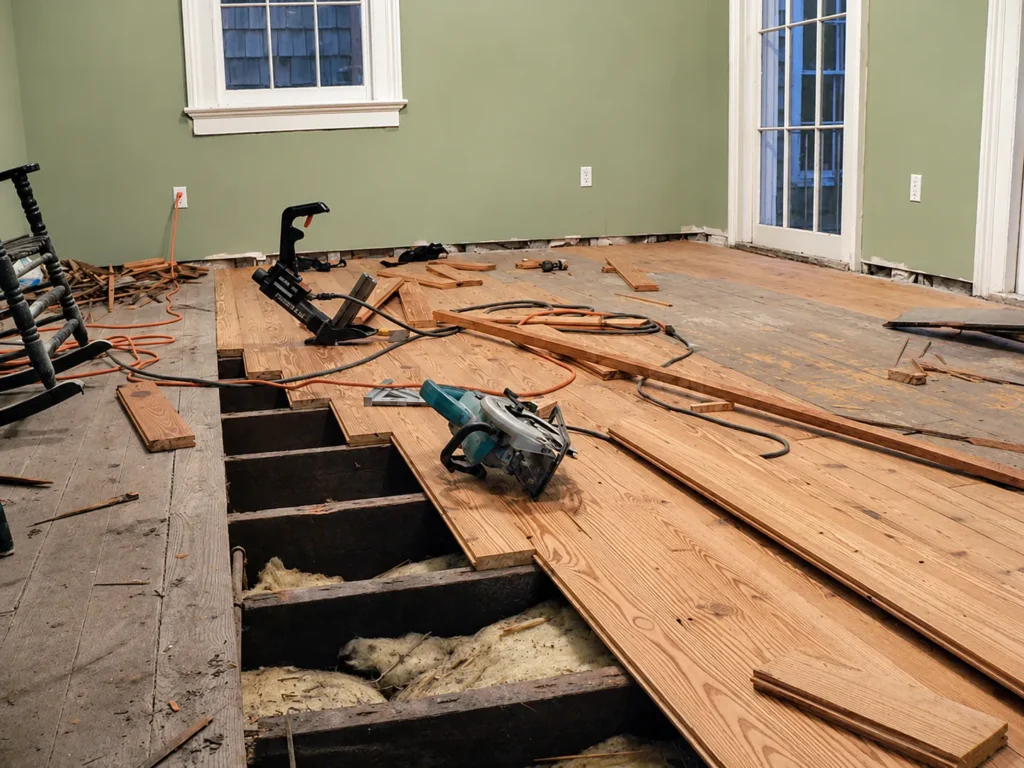
Existing hardwood deserves a separate decision. Scratches, dull finish, and grey wear do not always require replacement. Hardwood floor refinishing in Ottawa may restore structurally sound boards. Deep water damage, movement, or broken boards may call for floor repair in Ottawa. The useful question is simple: did the finish fail, or did the floor fail? One answer needs sanding. The other needs investigation.
Bedrooms, Nurseries, and Home Offices: Carpet Handles Sound and Cold Feet
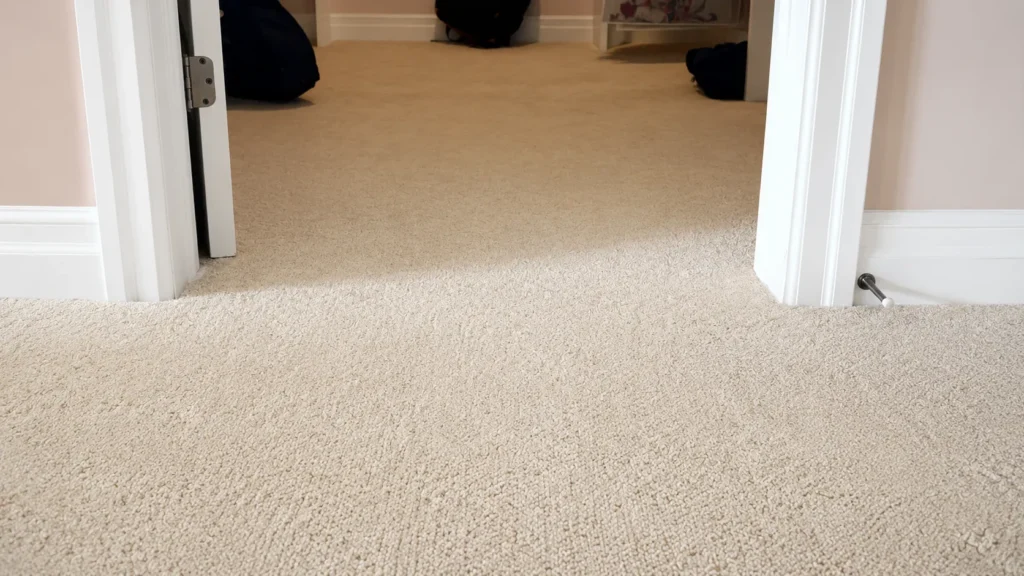
Bedrooms ask less from a floor and more from the nerves. People want quiet footfalls, little echo, and no shock from a January floor at six in the morning. Carpet handles those jobs. The Carpet and Rug Institute notes that carpet absorbs sound, helps block transmission between floors, and adds thermal resistance. Underlay strengthens those effects. The result stays practical – quiet steps, softer landings, and a room that does not broadcast every dropped phone. See the CRI overview of carpet benefits.
Low-pile carpet often makes sense in a home office. It reduces room noise and gives rolling chairs a firm path. Plush pile can resist chair wheels and show traffic lanes. Hardwood works well under office chairs, though felt pads and a suitable chair mat protect the finish. Vinyl plank also handles chair movement, provided the product warranty allows rolling loads and the subfloor stays flat.
Nurseries add spills, crawling, and toys with sharp ambitions. Carpet gives a cushioned surface. It also needs prompt spot cleaning and regular vacuuming. The CRI suggests weekly vacuuming for light-traffic areas, twice-weekly cleaning for medium traffic, and frequent cleaning in high-traffic or pet areas. Manufacturers may set their own care rules. Read the CRI vacuum schedule and the carpet warranty before choosing a pale, deep pile for a room occupied by juice.
Moisture changes the verdict. Carpet should not cover a room with recurring dampness, past flooding, or an unresolved leak. The EPA states that damp carpet can support microbial growth. A basement bedroom needs moisture testing and a plan for the slab before carpet enters the discussion.
For a normal above-grade bedroom, carpet installation in Ottawa remains the direct choice. For a household that values easy hard-surface cleaning, hardwood or vinyl with a washable area rug keeps the room simple. The rug can leave. The floor stays.
Kitchens, Mudrooms, and Laundry Rooms: Vinyl Plank Takes the Wet Shift
A kitchen renovation ties the floor to the cabinets and counters. The sequence matters. Cabinets need a firm, level base. Stone countertops add serious weight. Older Ottawa cabinet boxes may need reinforcement before they carry quartz or granite. Countertop templating should also happen after the cabinets sit in their final positions. A crooked cabinet run leaves the stone crew with an expensive geometry problem.
The surface materials carry different maintenance rules. Quartz resists stains and does not need sealing, though hot cookware requires a trivet. Granite handles heat and needs periodic sealing because the stone is porous. Laminate cleans easily and leaves more room in the renovation budget, but heat and sharp objects can damage it. Once laminate chips or scorches, refinishing is not an option. The full Ottawa guide to quartz, granite, and laminate countertops explains those limits in practical terms.
The flooring decision starts beneath all of that. Floating vinyl plank usually needs perimeter movement space. Many products should not sit trapped beneath fixed cabinets. The manufacturer’s instructions settle the issue. Water also finds cabinet edges, appliance gaps, and plank seams. A waterproof product can survive a spill. It cannot repair a leaking dishwasher line or flatten a poor subfloor – no flooring box has become that ambitious yet.
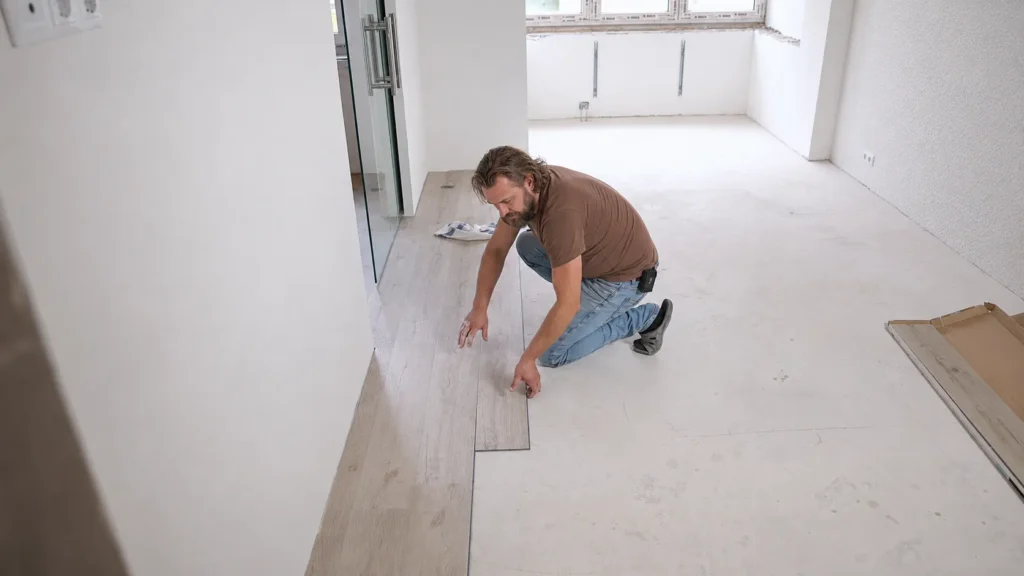
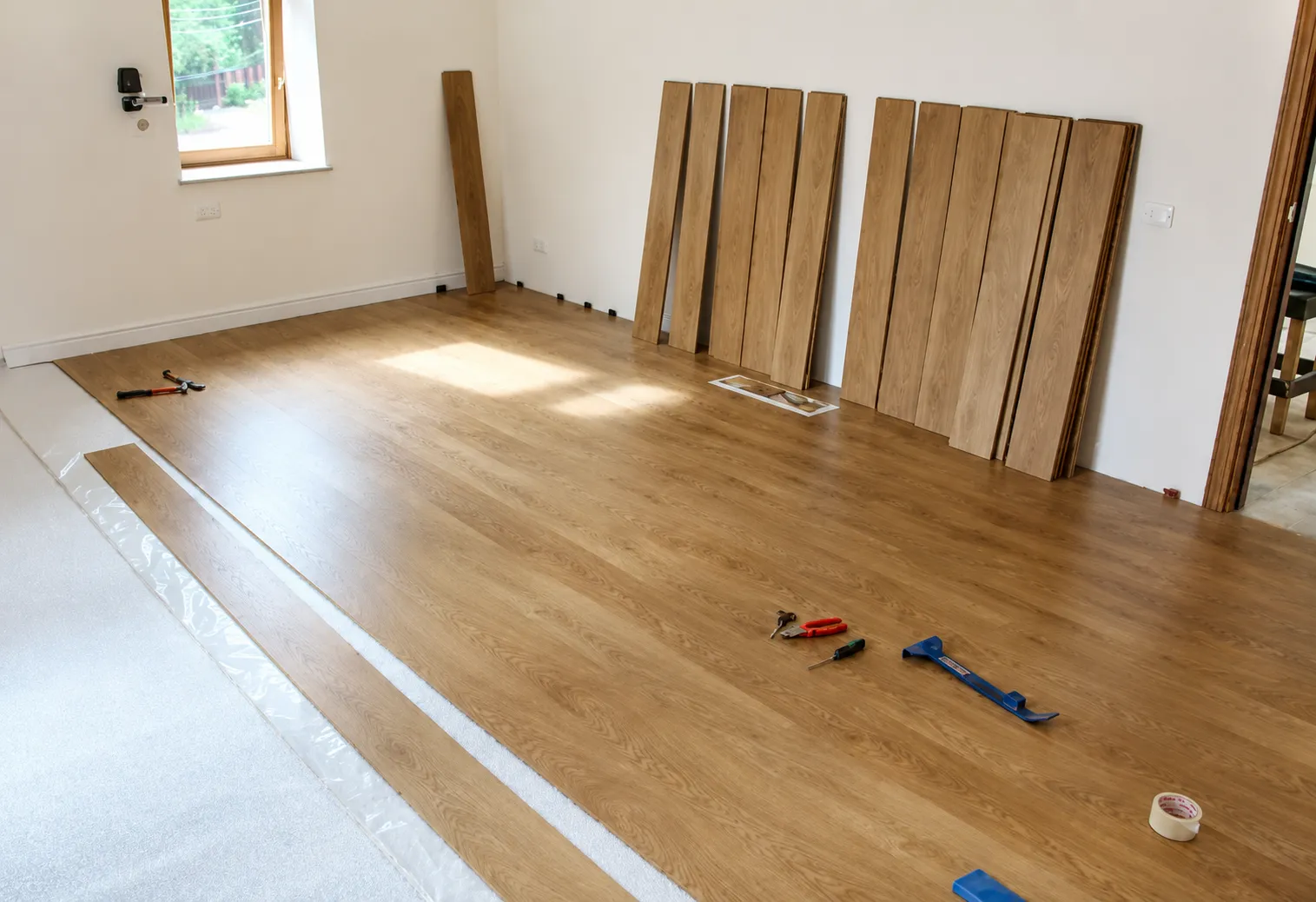
Subfloor preparation decides whether the planks lie quietly or announce every low spot. The surface must meet the product’s flatness, dryness, and cleanliness requirements. Perimeter expansion space also matters for many floating systems. Shaw’s installation guidance tells homeowners to follow product-specific instructions, prepare the subfloor, and leave the required expansion space. It also says suitable luxury vinyl products can go in water-prone areas. Read the Shaw luxury vinyl installation guide as an example of the detail manufacturers require.
Hardwood can live in a kitchen. Many Ottawa homes already prove it. The owner must wipe spills quickly, control grit, and accept that a plumbing leak can mark boards. Carpet has no useful role around sinks, washers, or exterior winter doors. The EPA’s moisture guidance says the same thing in less cheerful language.
A mudroom needs mats on both sides of the door. Mats catch sand before it acts as an abrasive. They also hold meltwater away from seams. Clean salt residue according to the flooring manufacturer’s instructions. The NWFA warns that winter salt and dirt can scratch wood finishes, and it recommends prompt puddle cleanup.
The default choice remains luxury vinyl plank flooring installation in Ottawa. The default still requires a sound subfloor – water resistance does not flatten concrete.
Basements and Bathrooms: Moisture Writes the Rules
Basements tempt people into decorating before diagnosis. The concrete looks dry. The room smells fine. Then spring arrives, or a drain backs up, or vapour moves through the slab. CMHC states that moisture can rise through concrete or collect on cool concrete, leaving carpet and underpad damp. CMHC also warns that dampness inside materials can support mould growth. The correct order starts with leaks, drainage, humidity, cracks, and slab moisture. Flooring comes later. Read the CMHC mould resource before covering a suspicious floor.
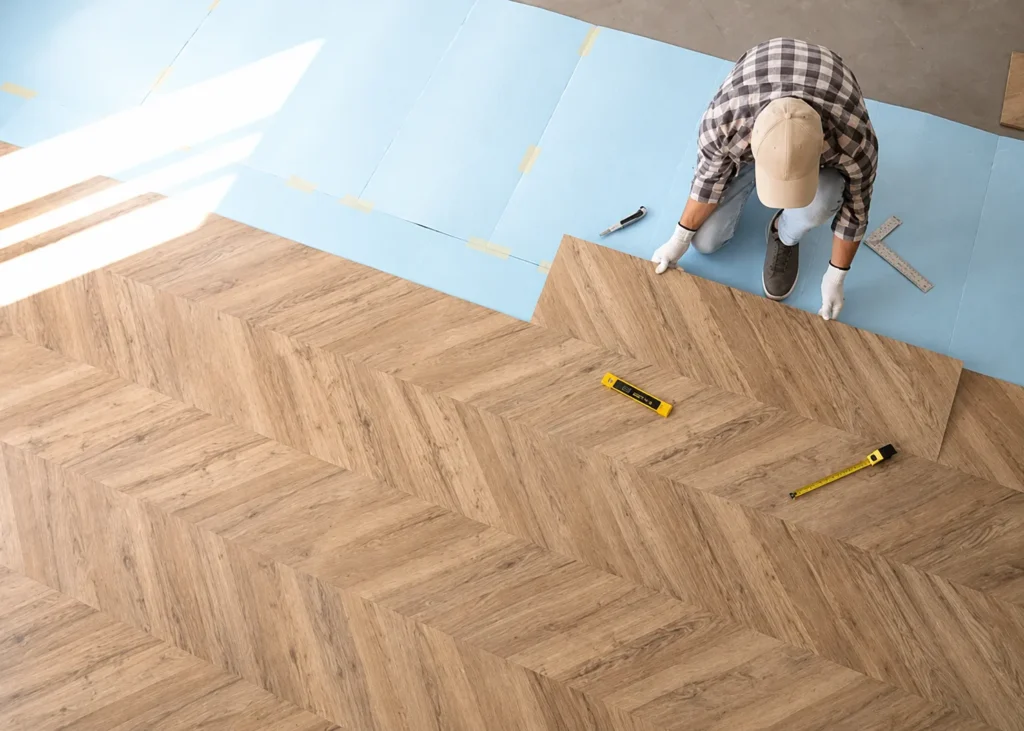
Vinyl plank is the usual first choice for a finished basement. It can tolerate surface spills, and many products offer waterproof constructions. The assembly under it still needs attention. Concrete must meet moisture limits. Low areas need correction. The specified underlayment or subfloor system must suit the product. A waterproof top layer can hide a problem – hidden water still owns the basement.
Engineered hardwood can work in some basements over approved systems. The manufacturer must allow below-grade installation. The slab must pass testing. The room must maintain suitable humidity. Solid hardwood usually has limited below-grade applications. Carpet can work in a verified dry basement family room or bedroom, especially in modular tile form, though any history of seepage or flooding should end the debate. The EPA advises against carpet in spaces with chronic moisture and gives basements special attention.
Bathrooms produce frequent splashes and occasional standing water. Vinyl plank can suit the room when the manufacturer approves the exact product and installation. Pay close attention to toilet flanges, tub edges, perimeter sealing, and warranty language. Carpet does not belong there. Hardwood carries real risk around tubs, showers, and toilets. A small powder room presents limited water exposure, though the product instructions still govern the choice.
The Ottawa basement flooring guide covers moisture-friendly options and subfloor preparation. Homes with damaged boards or water staining should also consult the floor repair service in Ottawa page. Water leaves clues. Covering the clues creates a cleaner room for a while – then the bill returns.
Stairs, Hallways, and Entryways: Traffic Shows Every Mistake
Stairs punish loose material, weak nosings, poor transitions, and casual measuring. Carpet softens footfall noise and gives each tread a cushioned surface. The Carpet and Rug Institute notes that carpet on stairs dampens foot traffic. The installation must stay tight around the tread and riser. Loose edges create a hazard. Thick, soft pile can also blur the tread edge, so the carpet construction and stair detail need a deliberate choice.
Hardwood stairs create a continuous surface with hardwood hallways and main floors. Each tread, riser, and nosing needs a solid fit. The finish needs traction and regular cleaning. Bare wood stairs can sound sharp in a busy house. A runner can control noise while keeping part of the wood visible. The hardwood stairs service in Ottawa shows the local scope for recapping, refinishing, and carpet-to-hardwood conversions.
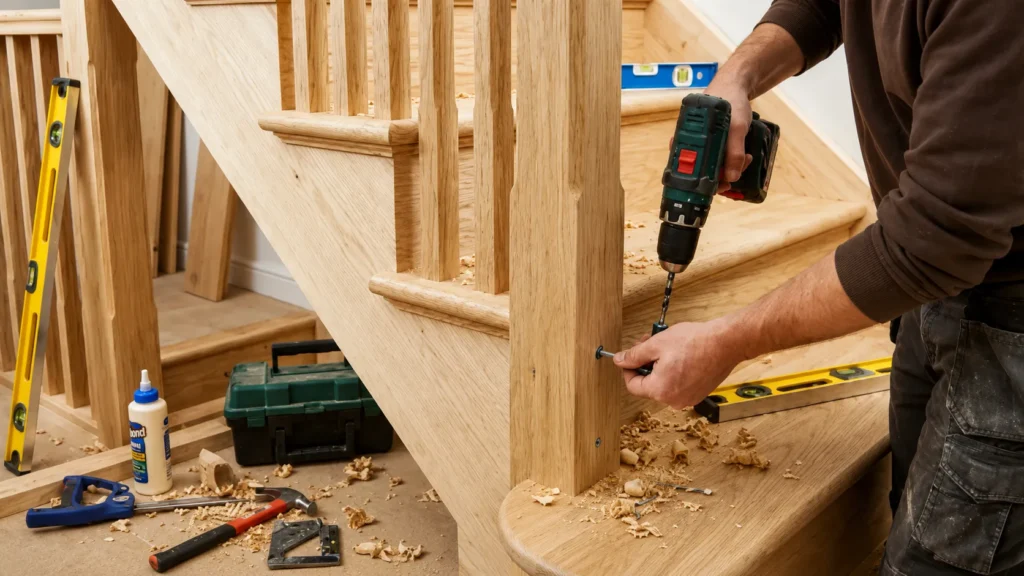
Vinyl plank can cover some stair systems, but the details matter. Use approved stair treads, caps, nosings, adhesives, and profiles. Do not improvise a folded plank over a stair edge. The product manufacturer must approve the assembly. The installer must create a secure nosing and consistent rise. Building safety has no sense of humour.
Hallways carry concentrated traffic. Hardwood works well with mats and felt pads in nearby rooms. Vinyl plank handles wet shoes and pet traffic. Carpet reduces noise outside bedrooms, though it shows soil at turns and doorways. Entryways receive the worst winter debris. Vinyl plank usually takes the first position among these three materials. A deep walk-off mat catches moisture and grit. A tray catches boot water. Neither item qualifies as interior design gossip – both prevent damage.
Open staircases and connected hallways also raise transition questions. A change from carpet to hardwood or vinyl can alter floor height. Poor transitions create a lip at the doorway. Existing squeaks or loose subfloor panels should be fixed before the finished floor hides them. Ottawa floor repair can address damaged boards and water-related defects. Floors reveal rushed work through noise, movement, and edges. They never wait long.
Cost, Upkeep, and Frequently Asked Questions
Cost starts with material, then the room adds its demands. Stairs add cutting and detail. Concrete adds moisture testing and levelling. Old flooring adds removal. A damaged subfloor adds repair. Open rooms move quickly. Small rooms with seven corners do not. The 2026 Ottawa flooring installation cost guide lists local planning ranges for carpet, vinyl plank, engineered hardwood, solid hardwood, and refinishing. The Ottawa flooring cost calculator helps build a first budget.
Upkeep follows the material:
- Carpet: Vacuum according to traffic, treat spills promptly, and follow the manufacturer’s deep-cleaning schedule.
- Hardwood: Control indoor humidity, remove grit, use felt pads, and clean with products approved for the finish.
- Vinyl plank: Sweep abrasive debris, damp-clean with an approved product, and keep water from sitting at unsealed edges.
- Every floor: Repair leaks first. A new surface cannot negotiate with active water.
New flooring and adhesives can affect indoor air during installation. The EPA lists newly installed flooring and carpet among potential indoor pollution sources. Ventilation and product selection matter. Look for credible low-emission certifications and follow the manufacturer’s curing and occupancy instructions. See the EPA introduction to indoor air quality.
What flooring is best for an Ottawa basement?
Vinyl plank is the common default after moisture testing and subfloor preparation. Engineered hardwood can work where the product allows below-grade use. Carpet needs a verified dry space and a plan for future water events.
Is hardwood suitable for an Ottawa kitchen?
Yes, with prompt spill cleanup, stable indoor humidity, and protection from grit. Vinyl plank creates a surface intended for routine water exposure when the chosen product permits it.
Does carpet make allergies worse?
Carpet holds dust and needs regular removal through effective vacuuming. Damp carpet creates a separate microbial risk. Household sensitivities, cleaning habits, ventilation, and product emissions all matter.
Can vinyl plank go in a bathroom?
Many products can. The exact product must permit bathroom installation. Follow rules for edges, fixtures, expansion space, adhesive, and underlayment.
Which floor works best with dogs?
Vinyl plank handles routine accidents and claw traffic well when the wear layer and warranty suit pets. Hardwood needs scratch control. Carpet offers traction and catches hair, which means frequent vacuuming.
Should damaged hardwood be replaced?
Not always. Sound boards with a worn finish may suit hardwood floor refinishing in Ottawa. Broken, loose, or water-damaged sections need repair before refinishing.